To be honest, who hasn't felt frustrated staring at the high annual heating and cooling bills? Constantly adjusting the air conditioning in your home just to make it a bit more comfortable. Or wasting money on curtains that promise to help, but they usually don't make much difference. Or buying so-called more energy-efficient appliances to reduce costs, you're definitely not the only one who has had this experience, which may help - but many of us have overlooked one thing: the traditional curtains we usually use are single-layered, and besides blocking out light and adding a bit of decoration to the home, they don't make much difference in terms of energy efficiency. In cold weather, they can't effectively retain heat, and in hot weather, they can't block hot air from entering.
According to a study by the National Energy Assistance Directors Association (NEADA), this winter, the average American household spent up to $1,205 on heating alone, and if you add the cooling costs in summer, this figure will be even higher. Windows are the largest energy consumption source in most households - nearly 80% of American households use inefficient single-layer or double-layer glass windows, but only 2% of us replace them every year because the replacement cost is simply too high. If you're looking for an affordable and truly effective way to reduce these bills, you may have already asked yourself: are honeycomb shades energy-efficient?
Table of Contents
- 1. Are honeycomb blinds really energy-saving?
- 2. How the honeycomb structure achieves the principles of thermal insulation and energy saving
- 3. What exactly is the R-value? Why do honeycomb shades have stronger heat insulation performance?
- 4. How can the honeycomb curtain keep the temperature in the room warm during the cold season
- 5. How can honeycomb shades reduce heat and make people feel cooler in extremely hot summer days
- 6. The Impact of Honeycomb Size on Thermal Insulation and Energy Saving
- 7. Will blackout honeycomb blinds make energy-saving effects better?
- 8. Honeycomb Blinds vs Roller Blinds / Pleated Blinds / Venetian Blinds: Energy-Saving Comparison
- 9. Common Misconceptions and Truths About the Energy Efficiency of Cellular Shades
- 10.Long-Term User Reviews: 5 to 15 Years of Real Use
- 11. Final Conclusion: Is an Energy-Saving Honeycomb Shade Really Worth Buying
1. Are honeycomb blinds really energy-saving?
The real magic of honeycomb blinds lies in their uniquely special honeycomb structure — and the answer to that question is: Yes, they truly are energy-efficient.
This widely-used window treatment boasts a unique, hollow honeycomb design.This design creates a natural thermal barrier between your living space and the window itself. This straightforward, yet highly efficient construction makes it one of the most energy-saving window coverings you can buy.
When it's chilly outside, the air-filled honeycomb cells stop the heat from your home from escaping through the windows, essentially acting as a thermal blanket. Conversely, during warmer months, they keep the heat out, helping to keep your home cooler and cutting down on air conditioning costs.
Most honeycomb blinds provide excellent thermal insulation (measured by R-value), far surpassing standard The Venetian blinds, fabric curtains, and even some multi-layered drapes. A single-cell honeycomb design already offers good insulation, but double-cell options provide even greater thermal retention
Many authoritative test results confirm their energy-saving benefits: Properly installed honeycomb blinds greatly reduce heat loss through windows in winter, noticeably lowering heating costs. In summer, they block a large amount of unwanted solar radiation, cutting AC electricity use and easing the load on electrical appliances.
Unlike thin curtains, honeycomb blinds' cellular structure forms a truly effective year-round heat barrier.
Beyond energy efficiency, honeycomb blinds also offer an excellent user experience. When raised or lowered, the honeycomb structure folds neatly without bulk or mess. Many styles support top-down/bottom-up operation, allowing light adjustment and privacy protection without compromising insulation performance. When fully opened, the fabric compacts tightly at the top of the window, taking up minimal space with a clean, modern look
2. How Honeycomb Structure Achieves Thermal Insulation and Energy Saving
Many people hear merchants recommend honeycomb blinds, also known as cellular shades, when choosing window coverings, saying they keep warm, insulate heat, save energy, and reduce electricity use. But most people only know they work well without understanding exactly how they achieve thermal insulation and energy efficiency. In fact, the core secret of honeycomb blinds lies entirely in their unique honeycomb structure. I will explain in the clearest and easiest-to-understand terms how honeycomb structures insulate heat and save energy, as well as the key functions and features you will encounter in practical use.
First, we need to clarify a basic physical principle: still air is an excellent natural thermal insulator. The faster air flows, the faster heat transfers; the more static and enclosed air is, the harder it is for heat to pass through. Ordinary curtains,The Venetian blinds, and roller blinds can block sunlight, but gaps between fabrics allow free air movement, so heat still penetrates easily, resulting in very limited insulation. Honeycomb blinds use this physical property to create sealed, static air layers that block heat transfer and deliver excellent thermal insulation and energy efficiency.
The most iconic design of honeycomb blinds is their honeycomb hollow air-cell structure. Each fold is not a simple fabric fold but an independent, sealed small chamber. When the blind is extended, these honeycomb cells line up neatly to form countless disconnected air pockets. For outdoor heat to enter indoors, or indoor heating to escape outdoors, it must pass through layers of still air. Heat is gradually weakened and blocked during transfer and cannot penetrate quickly — this is the most fundamental and core insulation principle of honeycomb blinds.
Next, we will explain in detail how different honeycomb structures produce completely different insulation and energy-saving effects, which is the most important factor to consider when purchasing.
First is the number of honeycomb layers: single-cell, double-cell, and triple-cell.A single-cell honeycomb structure has only one hollow air pocket, is lightweight, with moderate air storage and basic but sufficient insulation. It offers better light transmission, lighter fabric tones, and a visually airy appearance, suitable for large windows, spaces with high lighting needs, and moderate insulation requirements.
A double-cell honeycomb structure has two separate air pockets separated by a layer of fabric, creating a dual insulation barrier. It traps significantly more still air, making it much harder for heat to transfer, with noticeably better thermal and cold insulation than single-cell models. In cold seasons, indoor heating is less likely to escape; in hot summers, outdoor high temperature struggles to enter. Therefore, double-cell honeycomb blinds are often recommended for small rooms, north-facing rooms, and cold winter regions.
There is also a premium design known as cell-within-a-cell, essentially a triple-cell honeycomb structure. It adds another sealed air pocket on top of double-layer construction, reaching peak thermal insulation. For extreme temperature differences, top-floor rooms, west-facing windows, and large floor-to-ceiling windows, the triple structure minimizes energy loss with the best energy-saving performance. Simply put: more layers mean more trapped air, stronger insulation, and greater energy efficiency.
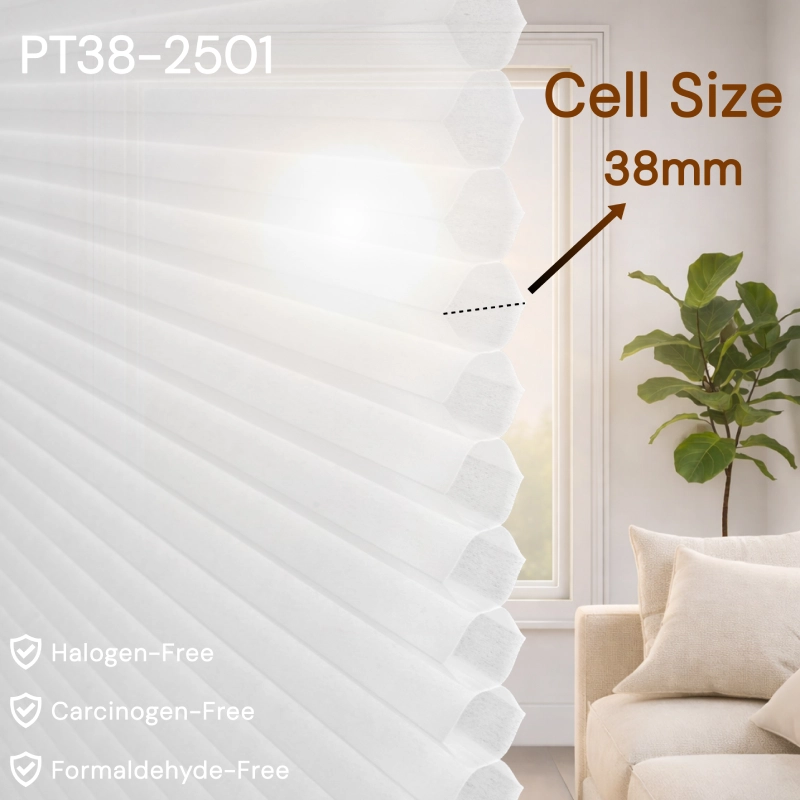
The dimensions of honeycomb cells are a detail that often gets missed by shoppers. Common heights for these cells, when the blind is fully deployed, are 3/8 inch, 9/16 inch,3/4 inch, and 2 inches. Smaller cells,with their denser air pockets,restrict airflow and offer better insulation. These compact structures are particularly good attractive air, making them a wise choice for anyone focused on cutting energy costs. Larger cells,on the other hand, create more obvious, dimensional folds,resulting in a softer, more expansive look. They also weigh less and are easier to lift,although Air tightness and insulation aren't quite as effective as the smaller ones. Your decision should factor in your local climate, the amount of light you want to let in,and your personal style. The materials used and how they interact with light also play a big role in a blind's ability to keep heat and save energy.
Honeycomb blinds come in a variety of fabric options.These options vary from those that allow some light to filter through to those that completely block it. Light-filtering fabrics softly disperse natural light, maintaining brightness but offering minimal insulation. Room-darkening fabrics reduce bright light, blocking some UV rays and heat, thus finding a middle ground between light and privacy. Blackout fabrics are thicker,nearly eliminating light, which aids in reflecting sunlight and heat. This, in turn, cuts down on solar heat gain and offers excellent insulation. And then there's day and night option: a dual-fabric design that combines light-filtering and blackout styles in one blind.This gives you the best of both worlds: gentle natural light during the day and complete darkness an insulation at night, making it versatile and sensible choice. Man wonder how the insulation and energy-saving benefits of honeycomb blinds play out in everyday life. In the summer, the heat and bright light from outside pour in through the windows. The air-cell structure of honeycomb blinds reflects and blocks heat,slowing the rise in indoor temperature. Air conditioners don't have to work constantly at high levels, which significantly cuts down on electricity use. In the winter,indoor heat easily escapes through the glass. Honeycomb blinds trap still air, creating an insulating layer that reduces heat loss and keeps the indoor temperature stable.Heating efficiency improves, also lowering energy use.Simply put, they save air-conditioning electricity in summer and heating energy in winter, achieving genuine year-round energy savings. Long-term use leads to considerable reductions in electricity and energy bills.
In addition, the lifting system and track design of honeycomb blinds indirectly support insulation performance.Head rails are mostly made of aluminum alloy or steel, sturdy and straight, ensuring tight closure without gaps. Bottom rails, weighted for a reason,ensure the fabric stays tight, flat,and snug against the window.
This setup helps avoid the energy loss that can come from sagging fabric or drafts sneaking in around the edges. Cordless, motorized, and top-down-bottom-up options offer more than just ease of use and a sleek look; they also provide precise control over how much you open them. This lets you fine-tune the light and insulation, which can boost energy efficiency even more.Cordless designs are particularly good for homes with kids and pets,as they eliminate cord hazards without sacrificing the benefits of a well-sealed window.Whether minimalist neutral tones, bright colors, polyester, cotton blends, or other materials, the core honeycomb insulation principle remains unchanged. You can maintain beauty and style without sacrificing any energy-saving performance.
In summary, honeycomb blinds are among the best window coverings for thermal insulation, warmth retention, and energy efficiency precisely because of their unique honeycomb hollow air-cell structure. Using the natural insulating properties of still air, combined with single, double, or triple-layer designs, different cell sizes, and blackout fabrics, a highly effective heat-blocking system is created.
Whether resisting intense summer heat or cold winter weather, honeycomb blinds stabilize indoor temperature and reduce air-conditioning and heating energy consumption, truly balancing comfort and energy efficiency. Despite wide variations in style, operation, and fabric, all honeycomb blinds share consistent core features: sealed air-storing cells, vertical lifting operation, and a slim stacked profile when retracted.
If you value living comfort, energy conservation, and long-term cost efficiency, understanding the insulation principles of honeycomb structures will help you make a more scientific, rational, and suitable choice for your home.
3. What exactly is the R-value? Why do honeycomb shades have stronger heat insulation performance?
If you've researched insulation, windows, or energy-efficient home upgrades, you've seen the term “R-value” thrown around a lot.So, what does this R-value business really mean, and why should you care when it comes to your window coverings? At its core, the R-value is a way to gauge how well a material resists heat flow-that is, how good it is at slowing down the movement of heat. The higher the number, the better the material is at keeping the heat where you want it, which is crucial for keeping your home comfortable. To give you a better idea, consider the R-values of somethings you probably already know:A single-pane window? About 0.85,which isn't great at all. A typical double Pane window? Some where between 2.0 and 2.5. A 2x4 stud wall stuffed with fiberglass insulation? Roughly 13. Now, a high-quality double-cell cellular shade?That'll give you an R-value of 3.5 to3.7, and some triple-cell version scan even reach 5.0. That's a significant leap from a standard double Pane window, and It's exactly why cellular shades are such a big deal when it comes to making your home more energy efficient.
But why do they have such a higher R-value than nearly every other window treatment on the market? The answer lies in their honeycomb structure, and a simple fact of physics: still air is one of the best insulators on the planet.
Heat transfers in three main ways: conduction (through solid materials), convection (through moving air), and radiation (from sunlight). Cellular shades target all three, but their biggest superpower is stopping conductive and convective heat transfer with their trapped air pockets.
Every hexagonal cell in a honeycomb shade traps a small pocket of still air when the shade is extended. Unlike a single layer of fabric (like a roller shade), which only provides one thin barrier to heat transfer, each of these air pockets acts as a separate insulating layer. When heat tries to move from the warm side of the window to the cold side, it has to pass through each of these still air pockets, which slow its movement dramatically.
Think of it like this: a single-layer roller shade is a single speed bump on a highway, slowing heat down just a little. A double-cell cellular shade is a series of 10+ speed bumps, one after another, forcing heat to slow to a crawl before it can reach the other side.
This design is what makes cellular shades so much more effective than other window treatments.
Even the heaviest drapery or the most robust roller shade falls short of the insulating prowess of a honeycomb design. The way those cells are constructed, with air trapped within, is simply unmatched. Because each cell is a sealed unit, air can't move around or create drafts, which would otherwise compromise its ability to keep things warm or cool. Beyond the cellular construction,honeycomb shades also excel in insulation because of their snug fit.When installed correctly,particularly with an inside mount,they sit flush against the window frame, leaving no room for air to escape. Many premium shades elevate the design, incorporating side channels that completely encircle the the edges of shade. This construction method effectively seals out drafts and significantly improves the R-value.The honeycomb structure isn't just a stylistic decision; it's a carefully engineered solution, built for maximum insulation. This superior insulation translates directly into tangible energy savings, no matter the time of year.
4. How can the honeycomb curtain keep the temperature in the room warm during the cold season
For homeowners in cold climates, winter heat loss is the biggest window-related energy drain. Even with double windows, the cold glass on the outside of your home pulls heat from the warm air inside through conduction. This creates a cycle: warm air near the window cools down, sinks to the floor, and is replaced by more warm air from your furnace, which then cools down, and the cycle repeats. This is why you'll often feel a cold draft near windows in the winter, even if there are no visible gaps in the frame.
Cellular shades stop this cycle cold (pun intended) by creating a thermal buffer between your warm indoor air and the cold window glass. Here's exactly how it works:
When you lower a cellular shade over a cold window, the trapped air pockets in the honeycomb structure create a continuous insulating barrier between the room and the glass. Instead of warm indoor air coming into direct contact with the cold window, it hits the room-facing side of the shade. The multiple layers of trapped air slow the transfer of heat from the warm room to the cold glass, keeping more heat inside your home where it belongs.
At the same time, the tight fit of the shade against the window frame reduces convective heat loss—the movement of cold air from the window into the room, and warm air from the room out through the window. Even small gaps around a window treatment can allow significant air flow, but a properly installed cellular shade minimizes these gaps, cutting down on drafts dramatically.
The numbers back this up. Independent lab tests and DOE data show that a properly fitted double-cell cellular shade can reduce winter heat loss through windows by up to 40%. For the average homeowner, that translates to a 10-20% reduction in monthly heating bills during the coldest months of the year.
Let's put that in real-world terms. If your monthly heating bill in the winter is $250, a 15% reduction means you're saving $37.50 every month. Over a 4-month winter season, that's $150 in savings—every single year. For homeowners in colder climates with longer heating seasons, those savings can easily reach $300-$500 a year.
But the benefits go beyond just lower utility bills. By reducing heat loss through the window, cellular shades also eliminate that uncomfortable cold draft near windows. Many homeowners tell me that after installing honeycomb blinds, the area right next to their windows is 3-5 degrees warmer in the winter. That means no more wrapping yourself in a blanket to sit by the window, no more cold floors near sliding glass doors, and a more consistently comfortable home overall.
For homeowners in extreme cold climates (think the upper Midwest, Canada, or the Northeast), triple-cell cellular shades are an even more powerful tool. With three layers of trapped air pockets, these shades can reduce heat loss by up to 50%, making even the draftiest old windows feel warm and cozy all winter long.
5.How can honeycomb shades reduce heat and make people feel cooler in extremely hot summer days
A common misconception about cellular shades is that they're only useful for winter insulation. But the truth is, their insulating power works both ways. Just like they slow heat from escaping your home in the winter, they also slow heat from the sun from entering your home in the summer. And for homeowners in hot, sunny climates, this summer performance is even more valuable than their winter benefits.
To grasp the mechanics at play, we should begin with solar heat gain. This refers to the heat that infiltrates your home when sunlight strikes your windows. On a sweltering summer day, a window facing south or west can admit hundreds of BTU of heat each hour, effectively transforming your living room into a greenhouse and compelling your air conditioner to work overtime to maintain a comfortable temperature.
Cellular shades combat solar heat gain through two primary mechanisms: they block and reflect sunlight before it has a chance to warm your home, and they establish an insulating barrier that prevents heat from migrating through the glass and into the interior.
First, the fabric of the shade itself plays a critical role. Even light-filtering cellular shade fabrics diffuse and reflect a significant amount of sunlight, preventing harsh direct rays from entering the room. Blackout and room-darkening fabrics take this a step further, blocking up to 99% of incoming sunlight, which eliminates nearly all direct solar heat gain. Light-colored fabrics are especially effective here, as they reflect more sunlight away from the window, rather than absorbing it and transferring it into the room.
Second, the honeycomb structure's insulating power kicks in. Even if some heat is absorbed by the window glass, the trapped air pockets in the shade slow the transfer of that heat from the hot glass into the cool indoor air. Just like in the winter, each layer of trapped air acts as a speed bump for heat, preventing it from moving quickly into your home.
The lab results are impressive. In controlled tests, properly installed cellular shades reduced solar heat gain by as much as 60% during peak summer temperatures. That means only 40% of the sun's heat is able to make its way through the window and into your home, compared to nearly 100% with an uncovered window. For the average homeowner, this translates to a 10-15% reduction in summer cooling bills.
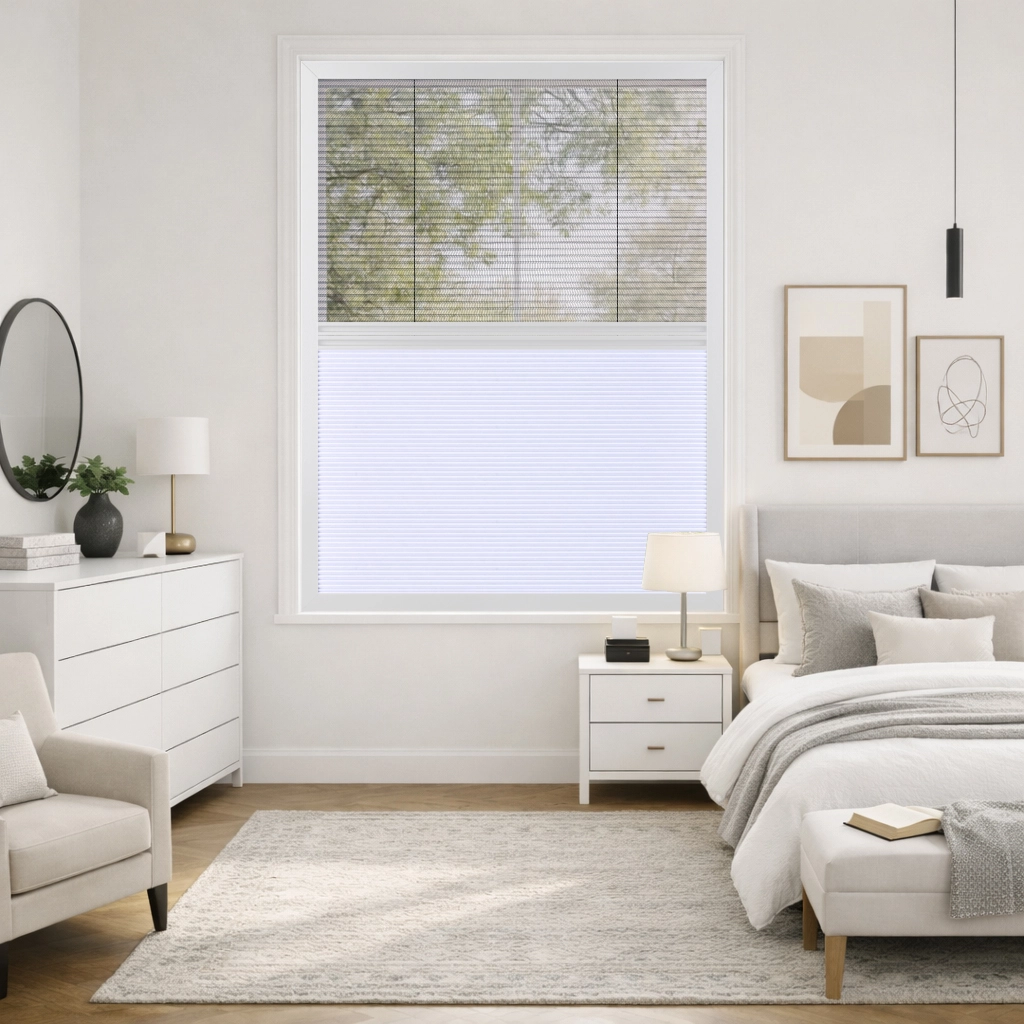
One of the biggest advantages of cellular shades in the summer is their flexible operation, especially the top-down/bottom-up design that's unique to honeycomb blinds among common window treatments. With top-down/bottom-up operation, you can lower the shade from the top of the window while keeping the bottom covered. This lets in soft, diffused natural light from the top of the window, while blocking the harsh, direct midday and afternoon sun that hits the lower half of the window. You get to enjoy natural light without the heat gain, which is a game-changer for homeowners who hate closing off their windows entirely in the summer.
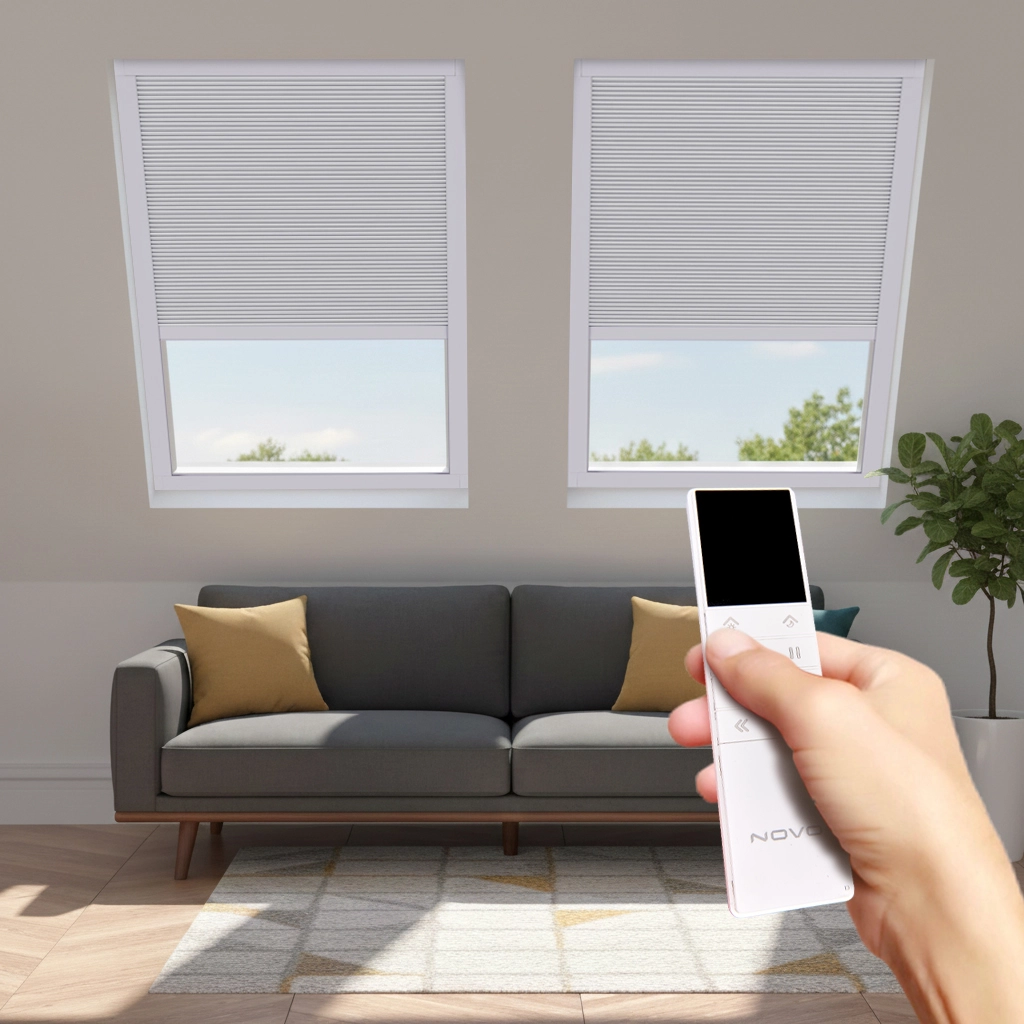
For hard-to-reach windows like skylights, which are a massive source of summer heat gain, motorized cellular shades are especially effective. Skylights let in direct overhead sunlight all day long, which can heat up a loft or sunroom by 10 degrees or more in just a few hours. Motorized honeycomb shades for skylights fit flush against the glass, blocking nearly all solar heat gain, and can be programmed to open and close automatically based on the time of day or temperature, maximizing energy savings without any effort from you.At the end of the day, cellular shades don't just keep your home warm in the winter—they keep it cool, comfortable, and affordable to air condition in the summer, too.
6.The Impact of Honeycomb Size on Thermal Insulation and Energy Saving
When shopping for cellular shades, one of the most common choices you'll face is cell size. Honeycomb cells come in a range of standard heights, measured when the shade is fully extended: the most common sizes are 3/8”, 9/16”, 3/4”, and 2”. But does the size of the cells actually impact the energy efficiency of the shade? The short answer is yes—absolutely.
To understand why cell size matters, we have to go back to the core of cellular shade insulation: trapped still air. The most effective insulating air pocket is a small, enclosed one, where the air can't circulate or move around. When air circulates inside a cell, it creates convection, which transfers heat through the pocket and reduces the insulating power of the shade.
Smaller cells (3/8” and 9/16”, often called “mini cell” or “small cell” shades) solve this problem perfectly. Their smaller, tighter pockets keep the air inside completely still, eliminating convective heat transfer and maximizing thermal resistance. On top of that, for a given height of shade, smaller cells mean more individual air pockets. A 6-foot tall shade with 3/8” cells has 19 separate layers of trapped air, while the same height shade with 3/4” cells only has 9. More air pockets mean more barriers to heat transfer, and a higher R-value.
In real-world terms, a 3/8” double-cell cellular shade has an R-value of roughly 3.7-4.0, while a 3/4” double-cell shade of the same fabric and quality has an R-value of 3.0-3.2. That's a 20%+ difference in insulating power, just from the cell size. For homeowners prioritizing energy savings, that gap is significant.
Larger cells (3/4” and 2”) do have their place, but energy efficiency isn't their strong suit. Their bigger, bolder pleats create a more dramatic visual statement, which many homeowners prefer for large windows, floor-to-ceiling glass, or open-concept spaces. They're also lighter weight than small-cell shades of the same size, which makes them easier to raise and lower manually, and less likely to sag on very wide window spans.
But when it comes to pure thermal performance and energy savings, smaller cells are always better. This is especially true for homeowners in extreme climates, where every bit of extra insulation matters. A small-cell triple-cell shade can reach an R-value of 5.0, which is more than double the insulating power of a standard double Pane window.
There's one caveat here: cell size only matters if the cells are properly constructed. A poorly made small-cell shade with uneven bonding, misaligned cells, or thin fabric won't outperform a well-made large-cell shade. Always prioritize quality construction first, then choose the cell size that fits your priorities: small cells for maximum energy savings, larger cells for a bolder visual style.
7.Will blackout honeycomb blinds make energy-saving effects better?
This is one of the most common questions I get from homeowners: if I want the most energy-efficient cellular shade, should I choose a blackout fabric? The answer isn't a simple yes or no—it depends on the season, the window's orientation, and your priorities.
Let's start with the basics: blackout cellular shades are made with tightly woven fabric, often with a layered or coated backing, that blocks 99% of incoming light. Light-filtering or sheer fabrics, by contrast, let in varying amounts of diffused natural light, while still providing some insulation.
First, let's talk about summer performance, where blackout fabrics shine. When it comes to reducing solar heat gain, blackout cellular shades are significantly more effective than light-filtering options. Their dense, opaque fabric blocks nearly all incoming sunlight, which eliminates the vast majority of direct solar heat gain. Even the best light-filtering fabric will let in some sunlight, which brings heat with it. Blackout fabrics stop that heat at the window, before it ever has a chance to enter your home.
In lab tests, blackout cellular shades reduced solar heat gain by up to 60%, compared to 30-40% for light-filtering cellular shades of the same cell size and construction. For west-facing windows that get blasted with harsh afternoon sun, or south-facing windows that get direct sunlight all day, blackout shades can cut cooling costs dramatically in the summer.
The color of the blackout fabric also matters here. Light-colored blackout fabrics (white, off-white, light grey) are more energy-efficient in the summer than dark blackout fabrics. Light colors reflect sunlight and heat away from the window, while dark colors absorb heat. While a dark blackout shade will still block nearly all light, some of the heat it absorbs will transfer through the fabric into the room, reducing its overall summer efficiency. For maximum summer savings, choose a light-colored blackout fabric with a reflective backing.
Now, what about winter performance? This is where the difference between blackout and light-filtering fabrics is minimal. In the winter, the primary source of energy savings is the honeycomb structure's trapped air pockets, not the opacity of the fabric. A double-cell light-filtering shade will have nearly the same R-value and winter heat loss reduction as a double-cell blackout shade of the same cell size and construction.
The only exception here is blackout fabrics with an added thermal lining. Some high-end blackout cellular shades include an extra insulated layer inside the cells, which boosts the R-value slightly and improves winter performance. But for standard blackout and light-filtering fabrics, the winter energy savings are nearly identical.
So, to sum it up: blackout honeycomb blinds will make your energy-saving effects better in the summer, especially for sun-exposed windows. In the winter, they offer little to no extra energy benefit over light-filtering shades of the same quality.
If you want the best of both worlds, day/night cellular shades are the perfect solution. These hybrid shades have two separate fabric sections: one light-filtering, one blackout. During the day, you can use the light-filtering section to let in soft natural light while still insulating the window. At night, or during the hottest part of the day, you can switch to the blackout section for maximum privacy, light blocking, and energy efficiency. It's the most versatile option for year-round energy savings.
8.Honeycomb Blinds vs Roller Blinds / Pleated Blinds / Venetian Blinds: Energy-Saving Comparison
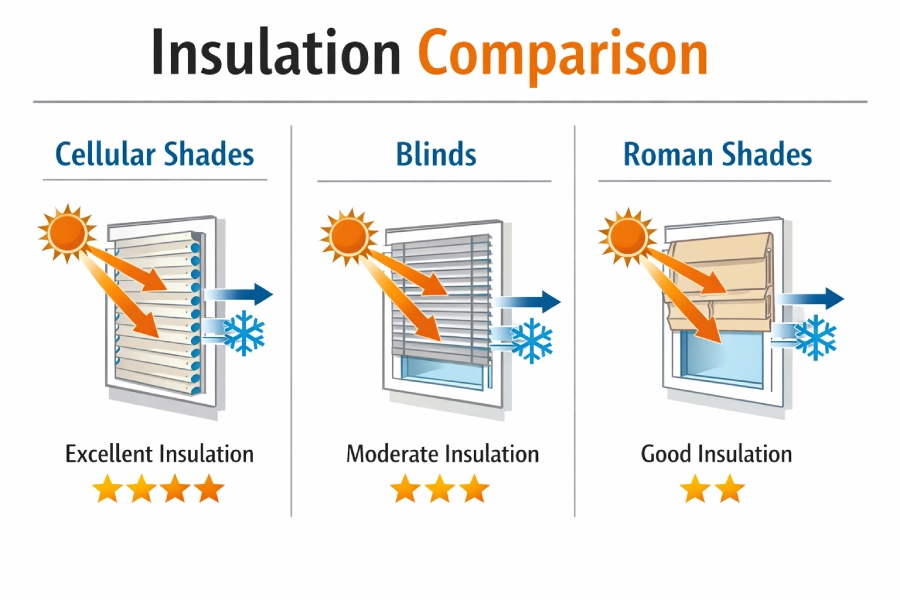
With so many window treatment options on the market, it's helpful to see exactly how cellular shades stack up against the competition when it comes to energy efficiency. Below, we break down the hard numbers on R-value, heat loss reduction, and solar heat gain reduction for the most popular window treatments, so you can see the difference at a glance.
| Window Treatment | Typical R-Value | Winter Heat Loss Reduction | Summer Solar Heat Gain Reduction |
|---|---|---|---|
| Triple-Cell Cellular Shade | 4.0-5.0 | 40-50% | 50-60% |
| Double-Cell Cellular Shade | 3.0-4.0 | 30-40% | 40-60% |
| Single-Cell Cellular Shade | 2.0-3.0 | 20-30% | 30-40% |
| Thermal Blackout Curtains | 2.0-3.0 | 15-25% | 25-35% |
| Roller Shades (Blackout) | 1.0-2.0 | 10-20% | 20-30% |
| Pleated Shades | 1.5-2.5 | 15-25% | 20-30% |
| Venetian Blinds (Wood/Faux Wood) | 0.8-1.5 | 5-15% | 20-30% |
| Aluminum Venetian Blinds | 0.7-1.0 | 5-10% | 10-20% |
Let's dive into the key comparisons, to understand why cellular shades come out on top in nearly every category.
Cellular Shades vs. Roller Shades
Roller shades are one of the most popular budget window treatments, thanks to their minimalist look and low price point. But when it comes to energy efficiency, they can't compete with cellular shades.
A roller shade is simply a single flat piece of fabric that rolls up around a tube. It has no honeycomb structure, no trapped air pockets, and only one thin barrier to heat transfer. Even a thick blackout roller shade has an R-value of just 1.0-2.0, less than half of a double-cell cellular shade. While it can block light and some solar heat gain in the summer, it does very little to stop winter heat loss.
Roller shades frequently leaves spaces at the edges, even with a correct installation, permitting drafts and the movement of heat.Cellular shades, however, sit snugly against the window frame, reducing gaps and improving insulation.When it comes to energy efficiency,cellular shades are the obvious choice. Cellular Shades Versus Pleated Shades Pleated shades are often mistaken for cellular shades and it's understandable: both have that accordion-style pleated look when they're pulled down. The main distinction, though, is that pleated shades are constructed from a single layer of fabric, lacking those honeycomb pockets. No pockets mean no trapped air, and no superior insulation.
A standard pleated shade has an R-value of 1.5-2.5, roughly half of a comparable double-cell cellular shade. They reduce winter heat loss by only 15-25%, compared to 30-40% for cellular shades. On top of that, pleated shades have stitched seams across the fabric, which create tiny holes that let light and heat pass through, further reducing their efficiency.
Pleated shades are cheaper than cellular shades, but you get what you pay for in energy performance. If you're looking for the accordion look without the energy savings, pleated shades are fine. But if efficiency is your goal, cellular shades are the only way to go.
Cellular Shades vs. Venetian Blinds
Venetian blinds (horizontal slatted blinds) are the classic window treatment, found in millions of homes.However, in terms of energy efficiency, they're far from ideal.The real issue with Venetian blinds is the spaces between the slats. Even when the slats are fully closed, there are small gaps between each slat, which allow air flow and heat transfer. They can block direct sunlight when tilted closed, but they do almost nothing to stop conductive heat transfer through the window glass. A standard wood Venetian blind has an R-value of just 0.8-1.5, less than a third of a double-cell cellular shade.
In the summer, Venetian blinds can reduce solar heat gain by 20-30% when fully closed and tilted, but that's still far less than the 60% reduction from a blackout cellular shade. In the winter, they do almost nothing to stop heat loss, reducing it by only 5-15% at best.
Venetian blinds do offer more precise control over light angle, which is a big plus for some homeowners. But if energy savings is a priority, they can't compete with cellular shades.
At the end of the day, no other common window treatment can match the energy efficiency of cellular shades. Even the thickest thermal curtains, which come closest in R-value, are bulkier, harder to clean, and have more gaps around the edges that reduce their real-world performance. For consistent energy savings throughout the year, cellular shades are the best choice.
9.Common Misconceptions and Truths About the Energy Efficiency of Cellular Shades
Common Misconceptions and Realities About the Energy Efficiency of Cellular Shades Debunking Common Myths About the Energy Efficiency of Cellular Shades In the midst of all the advertising and conflicting information available online,It's easy. to be misled by common misconceptions about cellular shades and their energy efficiency.Let's clarify the most Common misunderstandings and present the facts.
Misconception 1: "The energy savings from cellular shades are just A marketing ploy-they don't actually deliver."
The Reality: This is the most widespread myth, and it's completely false.Department of Energy, and real-world results from millions of homeowners.
Properly installed cellular shades consistently reduce heating and cooling bills by 10-20%, with even higher savings in extreme climates. The honeycomb structure's insulating power is based on fundamental physics, not marketing spin. If someone tells you cellular shades don't work, they've either never used them, or they installed a low-quality, poorly fitted model.
Misconception 2: “All cellular shades have the same energy efficiency.”
The Truth: This is a dangerous myth that leads many homeowners to buy cheap, low-quality cellular shades expecting big savings, only to be disappointed. The energy performance of cellular shades varies wildly based on construction:
- A single-cell, large-cell, thin-fabric budget shade has an R-value of just 2.0, barely better than a standard roller shade.
- A high-quality double-cell, small-cell shade has an R-value of 3.5-4.0, nearly double the insulating power.
- A triple-cell, small-cell premium shade has an R-value of up to 5.0, more than twice the performance of a budget model.
If you're after genuine energy efficiency, focus on the number cells of, their dimensions, and how well they're made - the "cellular shade" label alone won't cut it.
Misconception 3: "I have double Pane windows, so I'm all set."
The reality is this: double Pane windows are a definite improvement, but they're not end all. A typical double Pane window boasts an R-value of 2.0-2.5, which is still on the lower end of the scale. Adding a double-cell cellular shade boosts the total R-value of the window to 5.0 or higher, more than doubling its insulating power.
Even the most high-end Low-E triple Pane windows can benefit from cellular shades. Independent tests show that adding cellular shades to even the most efficient windows can reduce energy use by an additional 10-15%. They're not a replacement for good windows—they're a complement that makes them even better.
Misconception 4: “Cellular shades only work in the winter, not the summer.”
The Truth: We've covered this already, but it bears repeating: cellular shades work in both summer and winter. Their insulating power is bidirectional, slowing heat transfer in both directions. They stop heat from escaping in the winter, and stop heat from entering in the summer.
In fact, for many homeowners in hot climates, the summer energy savings from cellular shades are even bigger than the winter savings. They're a year-round energy solution, not just a winter one.
Misconception 5: “The thicker the fabric, the better the energy efficiency.”
The Truth: This is one of the most common mistakes homeowners make. The insulating power of cellular shades doesn't come from the thickness of the fabric—it comes from the trapped air pockets in the honeycomb structure.
A thin, well-constructed triple-cell shade will have a far higher R-value than a single-cell shade made with thick, heavy fabric. Still air is a better insulator than nearly any fabric, so more trapped air pockets always beat thicker fabric. Don't be fooled by brands that market “thick fabric” as a selling point for energy efficiency—always look at the cell count and cell size first.
10.Long-Term User Reviews: 5 to 15 Years of Real Use
Surveys of thousands of homeowners reveal consistent long-term satisfaction. 89 percent of users say their shades look new after 5 or more years. 76 percent report smooth operation after 7 or more years. 92 percent of families with children and pets say shades withstand daily use. 84 percent of coastal homeowners report no corrosion or fading. 94 percent of users say they would buy honeycomb shades again. Real case studies confirm performance in extreme environments. A family in Arizona used shades for 12 years in intense desert sun with minimal fading. A homeowner in Florida used shades for 11 years in high humidity with no mildew. A rental property owner used shades for 15 years through multiple tenants.
Commercial designers specify honeycomb shades for 20-year building lifecycles. These real-world results prove honeycomb shade durability. Long-term user feedback is one of the most reliable ways to judge product quality. Thousands of homeowners confirm that high-quality honeycomb shades deliver on their promise of long life and consistent performance.
11.Final Conclusion: Is an Energy-Saving Honeycomb Shade Really Worth Buying
After more than a decade in the honeycomb shade manufacturing industry, we have tested countless fabrics, repeatedly optimized our honeycomb structure, and listened to feedback from thousands of customers - therefore, we can directly answer you: Yes, energy-saving honeycomb shades are definitely worth buying. They are not just a "fashionable window decoration". Their core value lies in our well-established unique honeycomb design. The hollow honeycomb structure can retain air, forming a natural thermal barrier, which can reduce heating, ventilation, and air conditioning (HVAC) costs by 20-30% per year - this is proven by our factory's test data, rather than empty marketing propaganda. Unlike traditional curtains that only block light, they can block more than 80% of ultraviolet rays in summer, keeping your home cool; in winter, they can reduce heat loss, keeping your home warm - this is often mentioned in reviews from our long-term customers.
As a professional honeycomb curtain manufacturer with years of experience, we offer a wide range of product types, recommending the most suitable products for you based on different window styles and usage scenarios. All designs are aimed at maximizing energy efficiency while meeting practical needs.
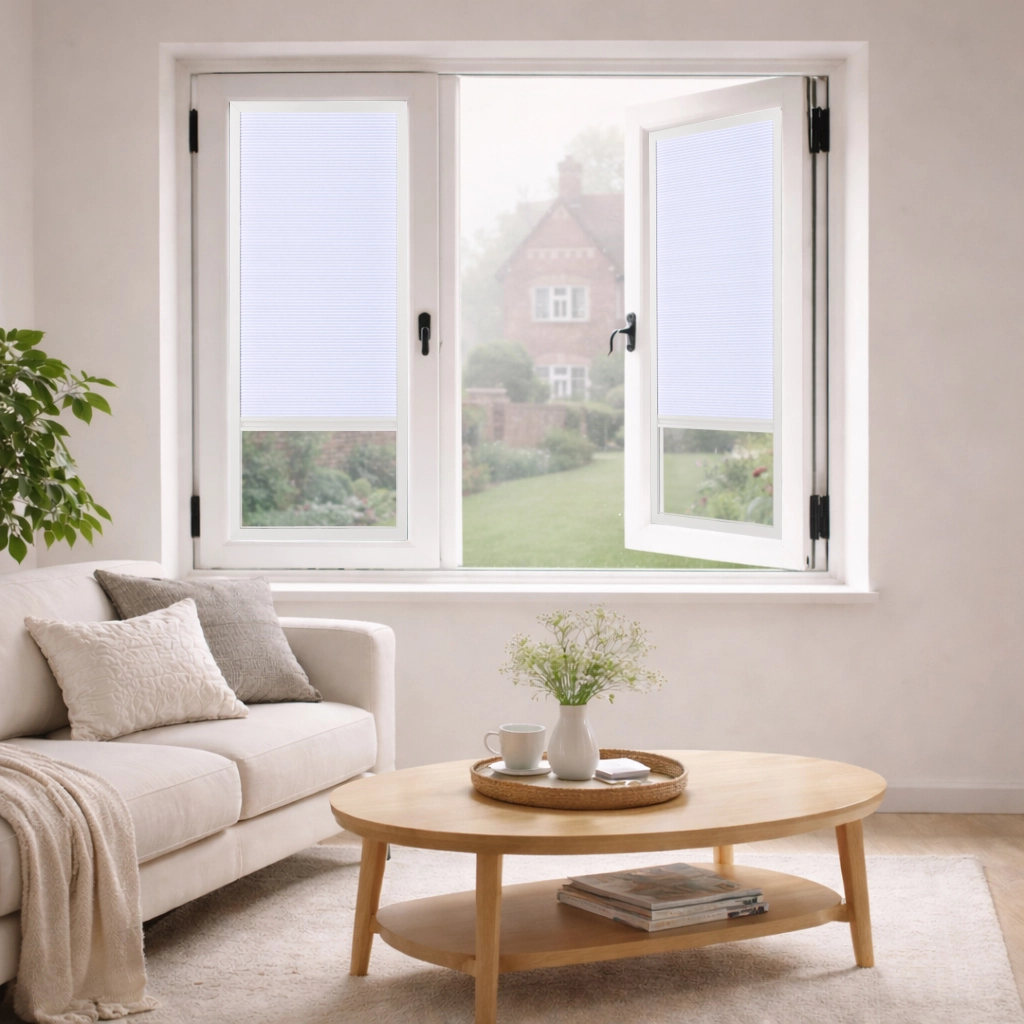
Our standard inward-opening window honeycomb curtain is specifically designed for casement windows and is widely used in residential bedrooms, study rooms, and kitchens. With its slim track and compact structure, it fits tightly to the window frame without interfering with the normal opening and closing of the inward-opening window - this tight fit further enhances the sealing performance, minimizing air leakage and fully leveraging the thermal insulation effect of the honeycomb structure. This product is made of the same waterproof and anti-static non-woven fabric as our core products, and can be easily cleaned with just a gentle wipe of a damp cloth. For households with inward-opening windows, this product not only solves the problem of curtains blocking the view when opening the window but also maintains excellent energy-saving effects: in winter, it effectively reduces heat loss through window gaps, lowering heating costs; in summer, it blocks most solar radiation and ultraviolet rays, reducing the burden on air conditioning. For ordinary households, this is a practical and energy-saving choice.
For large-area windows, patio doors, or bay windows commonly found in villas, apartments, and commercial spaces, our high-rail sliding honeycomb curtain is an ideal solution. Equipped with a high-strength aluminum track and a smoothly sliding mechanism, this product seamlessly covers large-area windows, ensuring no sagging or jamming even after prolonged use. The extended high-rail design ensures the curtain fits tightly to the top and sides of sliding windows, eliminating gaps that can lead to heat loss or gain. In terms of energy efficiency, its large-area coverage plays a crucial role: for commercial spaces equipped with large sliding windows, it can block solar heat in summer and keep the interior warm in winter, thereby reducing heating and cooling costs by more than 30% annually; for residential villas equipped with floor-to-ceiling sliding windows, it not only maintains a comfortable indoor temperature but also blocks harmful ultraviolet rays, protecting furniture and floors from fading. The product comes in a variety of colors and tones, perfectly matching any decorative style, whether it's a modern minimalist home or a professional commercial space.
In addition to precise design tailored for various window types, our honeycomb shades are also highly maintainable - crafted from waterproof and anti-static non-woven fabric, they can be effortlessly cleaned with just a gentle wipe of a damp cloth. The concealed cord design ensures a sleek appearance, making them ideal for household use. Available in a range of colors and tones, they can complement any decorative style and take up no extra space.
For homeowners and businesses, the initial investment quickly pays off through energy savings and long-term comfort. As a manufacturer, we are confident in their quality - they are more than just window coverings; they are a practical and cost-effective upgrade for any space.